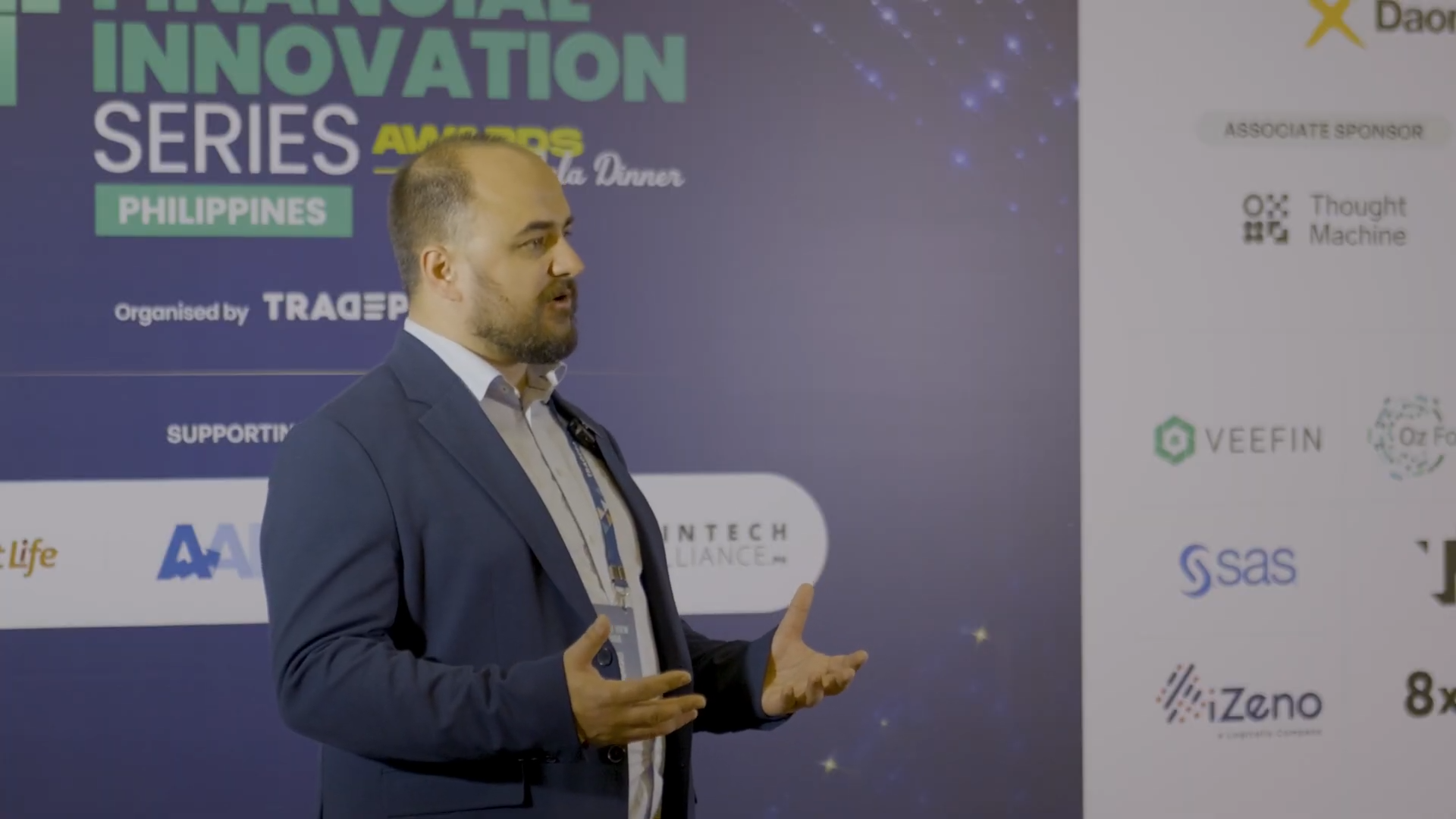

Nikolai Shiriaev
BDD (SEA) Vision Labs
As Philippine banks scale digital channels, expand API ecosystems, and migrate critical workloads to the cloud, the attack surface is widening at an unprecedented scale. Fraud is no longer limited to transactional abuse; it now exploits identities, data flows, and third-party integrations.
Against this backdrop, cybersecurity in financial services has shifted from a backend IT function to a core business resilience priority. In 2026, cyber in banking is being reshaped by real-time threats, stricter regulatory scrutiny, and the accelerating digital transformation Philippines is experiencing, spans across retail and institutional banking.
Fraud tactics targeting Philippine financial institutions have evolved beyond predictable card fraud and phishing campaigns. Criminal networks now use synthetic identities, account takeovers, and mule networks supported by automation and AI. These threats move faster than traditional rule-based controls, creating blind spots in detection and response.
Banks are responding by rethinking how fraud intelligence is collected and acted upon. Instead of isolated systems, institutions are prioritizing connected fraud platforms that unify transaction data, behavioral signals, and device intelligence. This shift allows teams to detect anomalies earlier and disrupt fraud before financial loss occurs. As cybersecurity in financial services matures, fraud prevention is increasingly tied to customer trust and brand protection rather than just loss mitigation.
In a hyper-connected banking ecosystem, identity has become the new security perimeter. With customers accessing services across mobile apps, digital wallets, and open platforms, managing who can access what is critical.
Philippine banks are strengthening identity and access management through adaptive authentication, continuous verification, and zero-trust principles. These approaches assume no user or system is inherently trusted, reducing the impact of credential compromise. In cyber banking, identity-centric security also supports frictionless customer experiences by balancing strong protection with usability.
As digital transformation in the Philippines accelerates, identity systems are being tightly integrated with fraud engines, compliance tools, and customer experience platforms, creating a more cohesive security posture.
Cloud adoption is no longer a future strategy, it is the operational backbone of modern banking. Core systems, analytics platforms, and digital channels increasingly rely on hybrid and multi-cloud environments. While cloud offers scalability and speed, it also introduces new risks related to misconfigurations, data exposure, and shared responsibility models.
Bank boards and executive leadership teams are now actively involved in cloud security governance. Decisions around encryption standards, workload isolation, and vendor risk management are discussed at the highest levels. Cybersecurity in financial services is therefore moving closer to enterprise risk management, ensuring cloud innovation does not outpace control maturity.
In the context of cyber in banking, cloud security is no longer a technical conversation, it is a strategic one that directly affects operational resilience and regulatory confidence.
Artificial intelligence is transforming both sides of the cybersecurity equation. While attackers leverage AI to automate fraud and evade detection, banks are deploying advanced analytics to fight back in real time. Machine learning models can now analyze massive volumes of transactions and user behavior to identify subtle patterns humans would otherwise miss.
Philippine banks are increasingly using AI-driven security operations to reduce response times and prioritize high-risk incidents. These capabilities are particularly effective in fraud prevention, anomaly detection, and threat intelligence correlation. As part of cybersecurity in financial services, AI enables proactive defense rather than reactive incident handling.
This analytical shift supports digital transformation in the Philippines, where data-driven decision-making is becoming central to competitive advantage and security resilience.
Regulatory frameworks across Southeast Asia are tightening, and the Philippines is no exception. Regulators expect banks to demonstrate not only compliance, but also measurable risk management and cyber maturity. Requirements around data protection, incident reporting, and third-party risk are shaping how security programs are designed and governed.
Rather than treating compliance as a checkbox exercise, forward-looking banks are aligning regulatory expectations with internal security roadmaps. This approach ensures that cyber banking supports long-term stability while also enabling innovation. Strong governance, clear accountability, and regular audits are now essential components of cybersecurity in financial services.
Despite technological advances, cybersecurity challenges cannot be solved in isolation. Threat intelligence sharing, peer learning, and collaboration between banks, regulators, and technology providers are critical. Industry dialogue helps institutions understand emerging risks, benchmark maturity levels, and learn from regional best practices.
This is where forums such as a cybersecurity finance conference play a vital role. They bridge the gap between strategy and execution by enabling leaders to exchange insights, align on priorities, and explore practical solutions. For Philippine banks navigating complex digital ecosystems, these conversations accelerate learning and reduce costly trial-and-error.
Addressing these challenges demands more than just internal roadmaps and vendor relationships. The speed at which fraud tactics evolve, identity threats multiply, and regulatory expectations shift means that no institution – regardless of size or sophistication – can afford to operate in isolation.
The banks and fintechs gaining ground are those that are actively seeking external intelligence, testing their strategies against peer experience, and engaging with the regulatory community.
That kind of proactive, cross-sector exchange requires the right environment, the most relevant and influential participants, and a shared commitment to raising the standard of financial security across the Philippines’ entire ecosystem.
It is this conviction that continues to drive the World Financial Innovation Series. Now in its fifth edition, WFIS is one of the region’s most authoritative cybersecurity finance conference for senior banking, fintech, and regulatory leaders confronting the security imperatives of a rapidly digitalizing financial sector.
Why Attend:
Secure your place at WFIS 2026 – Philippines, and be part of the conversation shaping the future of financial security.
Join industry leaders, regulators, and technology experts to gain actionable insights, build strategic connections, and strengthen your organization’s cybersecurity roadmap in an increasingly digital banking sector.
Event Details:
For more information about the event, visit: https://www.philippines.worldfis.com/
Don’t miss out!