Financial institutions across the Philippines are under growing pressure to improve customer access, strengthen digital trust, and support real-time financial services. Open finance is becoming a major part of that shift by enabling secure and consent-based data sharing between banks, fintech firms, lenders, insurers, and payment providers.
As customer expectations continue to rise, institutions are looking for ways to create connected experiences without weakening governance or compliance. Discussions around interoperability, cybersecurity, and customer consent are now shaping every major digital finance conference focused on the future of banking transformation and financial accessibility.
Why Open Finance Is Gaining Momentum in the Philippines
The Philippines is seeing rapid progress in open finance adoption as regulators, financial institutions, and fintech firms work towards a more connected financial ecosystem. The Bangko Sentral ng Pilipinas (BSP) continues to support financial modernization through policies that encourage secure digital banking and wider financial participation.
One of the biggest drivers behind this momentum is the push for financial inclusion. Millions of individuals and small businesses still have limited access to formal banking services. Open finance frameworks allow institutions to use alternative financial data for risk assessment, loan approvals, and customer onboarding. This creates opportunities for underserved communities to access digital financial products more efficiently.
High smartphone usage and rising digital payment adoption have also accelerated demand for integrated banking experiences. Consumers expect faster onboarding, easier payments, and personalized services across platforms. Financial institutions are responding by investing in API-based infrastructure and collaborative fintech partnerships.
The BSP’s Circular No. 1122 and the ‘Open Finance Oversight Committee Transition Group’ have created a structured path for secure implementation. These efforts are encouraging many open finance supporters to participate in discussions focused on governance, interoperability, and long-term scalability.
Building a Secure and Interoperable Financial Data Ecosystem
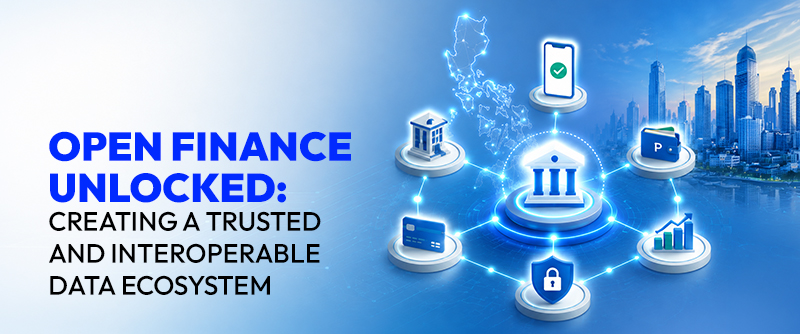
A trusted data ecosystem depends on strong interoperability between institutions. Financial organizations must exchange information securely while maintaining speed, transparency, and compliance. API-driven integrations are central to this model. APIs allow banks, fintech firms, insurers, and payment providers to connect systems without disrupting existing infrastructure. This supports smoother onboarding, account aggregation, and real-time transaction processing.
Standardized data exchange protocols also help institutions communicate consistently. Without standardization, organizations face delays, integration issues, and higher operational costs. Common frameworks improve efficiency and reduce friction between service providers. Financial institutions and fintech firms both play important roles in this process. Traditional banks bring regulatory experience, customer trust, and infrastructure scale. Fintech companies contribute speed, specialized tools, and customer-focused innovation. Together, they can build services that are more flexible and accessible.
Scalability remains another important factor. Open finance systems must support increasing transaction volumes, growing customer demands, and expanding partner networks while maintaining strong performance and security standards. This has become a key discussion point across every major event focused on banking solutions Asia has seen, particularly Southeast, centred on digital transformation and connected finance systems
Trust, Security, and Governance in Open Finance Implementation
Trust remains one of the most important foundations of open finance adoption. Customers are more willing to share financial information when institutions clearly explain how data is collected, stored, and used. Consent management frameworks help users maintain control over their personal financial data. Customers should be able to grant, review, and withdraw permissions without confusion. Clear consent structures also improve regulatory compliance and strengthen customer confidence.
Cybersecurity continues to be a major concern for financial organizations. As more systems become connected, institutions must protect APIs, customer databases, and transaction channels from cyber threats. Strong encryption, multi-factor authentication, and continuous monitoring help reduce operational risks. Regulatory compliance expectations are also becoming stricter. Financial institutions must align with national data privacy laws, anti-money laundering regulations, and cross-border data-sharing standards. Governance frameworks help ensure accountability across all participants in the ecosystem.
Third-party risk management is another critical area. Banks and fintech firms often rely on external vendors and service providers for cloud infrastructure, analytics, and payment systems. Proper due diligence, security audits, and ongoing assessments help maintain operational stability and customer trust.
Business Value of Open Finance for Financial Institutions
Open finance creates new commercial opportunities for financial institutions looking to strengthen customer relationships and improve operational performance. One major benefit is the creation of new revenue streams. Banks can offer embedded financial services, personalized lending products, subscription-based financial tools, and data-driven advisory services. These models help institutions remain competitive in increasingly digital markets.
Customer engagement also improves through personalized experiences. Open finance allows institutions to understand spending patterns, savings behavior, and transaction history more accurately. This supports tailored financial recommendations and better customer support. Product innovation becomes faster when institutions can access shared financial data securely. Banks and fintech firms can test and launch new services more efficiently without rebuilding infrastructure from scratch.
Operational efficiency is another major advantage. Automated onboarding, real-time verification, and integrated payment systems reduce manual processes and improve service delivery. Financial leaders attending every major open banking conference are increasingly focusing on these operational gains as institutions modernize their digital strategies.
Strategic Role of Industry Collaboration and Conferences
Open finance cannot succeed through isolated efforts. Collaboration between regulators, banks, fintech firms, technology providers, and compliance leaders is therefore necessary for long-term growth. Industry events create opportunities for knowledge exchange, policy discussions, and partnership development. Executives can evaluate implementation strategies, discuss regulatory challenges, and learn from regional case studies.
Such definitive collaboration also helps create balanced frameworks that encourage innovation while protecting consumers. Shared discussions support clearer standards for interoperability, security, and governance. Partnerships further help institutions accelerate deployment timelines and improve service delivery. These collaborations often lead to stronger infrastructure and better customer experiences.
Conferences focused on financial innovation also help organizations stay informed about evolving customer expectations, cybersecurity risks, and regulatory updates. For many financial leaders, these events serve as a practical platform for building long-term business relationships and identifying future investment opportunities.
Understand Open Finance Strategy at WFIS!
The upcoming World Financial Innovation Series (WFIS) in the Philippines will bring together delegates, C-suite executives, sponsors, fintech innovators, regulators, and banking leaders to discuss inclusion, innovation, and intelligence across the financial sector.
Scheduled for 25–26 August 2026 at Manila Marriott, Philippines, the event offers valuable insights from top policymakers and industry experts. Attendees can explore emerging open finance strategies, build strategic partnerships, and gain direct exposure to the technologies shaping the future of connected financial ecosystems.
Frequently Asked Questions (FAQs)
How does open finance improve financial inclusion in the Philippines?
Open finance allows banks and fintech firms to use alternative customer data, helping underserved individuals and MSMEs access loans, digital payments, savings tools, and other financial services more efficiently.
Why is interoperability important in open finance ecosystems?
Interoperability enables financial institutions and fintech platforms to exchange data securely through standardized systems, improving service delivery, reducing operational delays, and supporting smoother customer banking experiences across platforms.
What role do APIs play in open finance implementation?
APIs help financial institutions connect systems securely, allowing real-time data sharing, account integration, automated onboarding, and personalized financial services without disrupting existing banking infrastructure or customer operations.
What are the biggest security concerns in open finance systems?
Major concerns include unauthorized data access, weak consent management, API vulnerabilities, and third-party risks. Strong cybersecurity frameworks and regulatory compliance help institutions maintain customer trust and operational stability.
What can attendees expect from WFIS Philippines 2026?
WFIS 2026 – Philippines will connect delegates, C-suite leaders, sponsors, regulators, and fintech experts through discussions on open finance, digital banking innovation, financial inclusion, cybersecurity, and emerging banking technologies.