Financial services in the Philippines are becoming more connected, mobile-driven, and accessible through fintech super apps. What began as simple digital wallets has now expanded into integrated ecosystems offering payments, lending, insurance, savings, and investment services within one platform. This transition is helping financial institutions reach underserved communities while reshaping customer expectations around convenience and accessibility.
As adoption rises across urban and rural regions, banks, fintech firms, regulators, and investors are paying closer attention to infrastructure readiness, compliance frameworks, and partnership opportunities. For stakeholders monitoring the future of fintech in the Philippines, super apps are becoming central to financial inclusion and long-term market expansion.
How Fintech Super Apps Are Expanding Financial Access in the Philippines
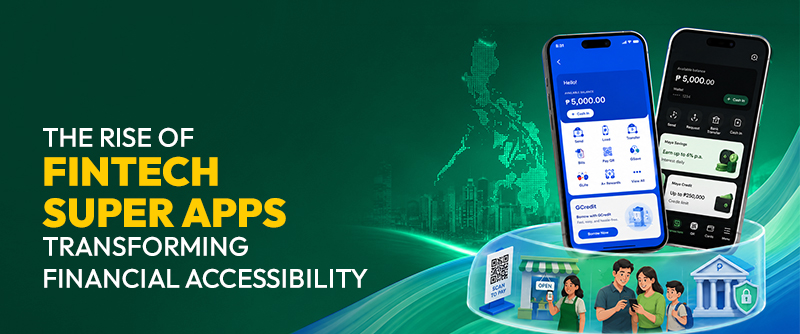
Super apps such as GCash and Maya are transforming financial accessibility by offering multiple services through a single platform. Their growth has contributed significantly to increasing the country’s banking population, particularly among underserved users and mobile-first consumers.
Key Drivers Supporting Financial Access
Alternative Credit Scoring
Platforms analyse transaction activity, mobile behaviour, and spending patterns to provide credit access for users without traditional banking histories. Services such as GCredit, GLoan, and GGives are expanding borrowing opportunities.
Financial Inclusion for Underserved Communities
Super apps are helping low-income and unbanked users access digital financial services through simplified onboarding and smartphone-based applications.
Accessible Investment Opportunities
Features such as GStocks are allowing average consumers to participate in investments with lower entry requirements.
Integrated Daily Financial Services
Users can complete payments, transportation bookings, online shopping, insurance purchases, and money transfers without leaving the app.
Growth of Embedded Finance
Banking, lending, and insurance products are increasingly integrated directly into customer journeys and transaction experiences.
Trust and Security Improvements
Enhanced ID verification systems and AI-supported fraud monitoring are helping strengthen user confidence in digital transactions.
The increasing adoption of these platforms is also accelerating the use of mobile banking in the Philippines, among both younger consumers and first-time digital banking users.
Changing Consumer Expectations and Digital Financial Behaviour
Consumer financial behaviour in the Philippines has changed rapidly as digital services become more accessible and practical for everyday use.
Major Consumer Behaviour Trends
Rising preference for unified financial platforms
Increased dependence on smartphone-based banking services
Stronger engagement with digital wallets for daily transactions
Wider adoption across urban and rural communities
Higher demand for instant transactions and simplified onboarding
Consumers now expect faster access to payments, lending, and account services through mobile platforms. This shift is encouraging financial institutions to strengthen app functionality, improve customer experience, and expand digital capabilities.
Payments Infrastructure Powering Super App Ecosystems
The growth of fintech super apps is strongly supported by the Philippines’ modernising payments infrastructure. Government-backed interoperability initiatives and real-time payment systems are helping accelerate the transition towards a cash-lite economy.
Key Components of the Philippines’ Payments Infrastructure
Super App Market Leaders
GCash serves more than 90 million users, while Maya continues expanding its integrated wallet and digital banking services.
QR Ph Interoperability System
The national QR code standard enables smoother transactions between banks and e-wallets through interoperable payment systems.
Real-Time Payment Rails
PESONet and InstaPay are supporting faster digital fund transfers and reducing reliance on physical cash transactions.
Open Finance Initiatives
APIs and secure data-sharing systems are helping institutions build more customised financial products and services.
Expansion of Digital Banks
Digital banks such as Maya, Tonik, Uno, and OFBank are increasing financial accessibility in underserved regions.
AI and Data Analytics Integration
Institutions are improving fraud detection, customer profiling, and transaction monitoring using advanced analytics tools.
As payment ecosystems continue expanding, infrastructure scalability and cybersecurity are becoming major discussion points at every leading payments and fintech conference across the region.
Regulatory Considerations for Multi-Service Financial Platforms
As super apps expand their service offerings, compliance requirements are becoming increasingly important for financial institutions and technology providers.
Key Regulatory Bodies
Bangko Sentral ng Pilipinas (BSP)
Primary regulator for banks, payment operators, and e-money issuers.
Securities and Exchange Commission (SEC)
Oversees financing companies, investments, and crowdfunding activities.
National Privacy Commission (NPC)
Responsible for enforcing data privacy regulations.
Core Regulatory Considerations
Licensing Requirements
Platforms may require EMI, OPS, or Digital Bank licences depending on their service structure.
AML and KYC Compliance
Strong customer verification and transaction monitoring remain mandatory under AML regulations.
Cybersecurity and Data Protection
Financial institutions must comply with BSP IT risk frameworks and the Philippine Data Privacy Act.
Partnerships between fintech firms and traditional banks are subject to outsourcing and operational risk regulations.
Key Industry Developments
Introduction of the Anti-Financial Account Scamming Act (AFASA)
Stronger collaboration between institutions for fraud prevention
Continued focus on API integration and payment interoperability
Increased adoption of regulated cloud infrastructure services
Regulatory readiness remains a key discussion area for institutions participating in any major seamless conference focused on financial services and payments innovation.
Business Opportunities for Banks, Fintechs, and Investors
The rapid expansion of super apps is creating significant opportunities across the Philippines’ financial ecosystem.
Emerging Opportunities Across the Sector
Partnership models between banks and fintech platforms
Embedded lending and insurance integrations
Merchant ecosystem expansion strategies
Subscription-based and transaction-driven monetisation models
Growth opportunities in underserved provincial markets
Investor interest in scalable digital financial infrastructure
Institutions that can combine strong compliance frameworks, scalable infrastructure, and customer trust are expected to strengthen their position within the growing fintech market.
Explore Fintech’s Growth at WFIS!
As the Philippine fintech landscape continues to evolve, bringing together the right stakeholders becomes essential for driving meaningful progress.
The World Financial Innovation Series (WFIS), taking place on 25–26 August 2026 at the prestigious Manila Marriott, Philippines, will bring together financial leaders, policymakers, technology providers, investors, and innovators shaping the future of financial services. The event offers high-value networking, strategic discussions, and market insights focused on inclusion, innovation, and intelligence across the Philippine financial ecosystem.
For delegates, C-suite executives, sponsors, and solution providers, WFIS presents a crucial opportunity to build partnerships, explore emerging opportunities, and engage directly with decision-makers leading financial transformation.
Frequently Asked Questions (FAQs)
1. What are fintech super apps and why are they growing in the Philippines?
Fintech super apps combine payments, lending, insurance, savings, and investment services within one platform, helping improve financial accessibility for both banked and underserved communities across the Philippines.
2. How are super apps supporting financial inclusion in rural areas?
Super apps provide smartphone-based financial services, simplified onboarding, and alternative credit assessments, allowing rural and underserved users to access banking, payments, and lending services more conveniently.
3. Why is payments infrastructure important for fintech super apps?
Modern payment systems such as QR Ph, InstaPay, and PESONet support faster transactions, interoperability, and digital financial adoption, helping super apps deliver reliable and scalable customer experiences.
4. What regulatory challenges do fintech platforms face in the Philippines?
Fintech platforms must comply with BSP regulations, AML requirements, cybersecurity standards, consumer protection policies, and licensing frameworks while managing partnerships, data privacy obligations, and operational risks.
5. What can attendees expect from WFIS 2026 – Philippines?
WFIS 2026 – Philippines will feature industry leaders, policymakers, technology innovators, and financial institutions discussing financial inclusion, payments innovation, partnerships, digital banking trends, and investment opportunities shaping the sector.